
Aquarium service
How can aquarium businesses attract recurring office maintenance contracts?
Win better-fit office aquarium contracts by clarifying maintenance scope, visit schedules, installation costs, and the consultation process.
The short answer
Aquarium businesses can attract recurring office maintenance contracts by selling a clearly defined upkeep program, separating installation from ongoing service, and making it easy for an office manager to request a site consultation.
An office manager is not simply buying a clean aquarium. They are coordinating building access, controlling expenses, and deciding who handles problems when reception staff notice something unusual. At Nickie Marketing & Design, we would organize your marketing around those operational questions. Beautiful tank photography earns attention, but a dependable service process gives a business buyer a reason to inquire.
01
Start with the person responsible for the lobby
Choose the commercial settings your team can genuinely support, such as professional offices, coworking spaces, or corporate reception areas. Then identify the likely contact: an office manager, facilities coordinator, or property manager. Each needs a concise explanation they can forward to whoever approves spending.
The SBA’s marketing and sales guidance emphasizes identifying target markets, defining competitive advantages, and setting specific goals. Apply that by choosing a practical service territory and a contract goal tied to your available technician hours, rather than advertising every aquarium service to everyone.
02
Separate the new aquarium from the ongoing agreement
Create distinct website paths for existing aquarium maintenance and new aquarium planning. An office with a neglected tank has a different question from one considering its first installation. Do not make either buyer navigate a product gallery to find the appropriate consultation.
For new installations, explain which planning, equipment, setup, and ongoing service items receive separate estimates. For existing tanks, describe the assessment required before quoting recurring care. Avoid suggesting that a standard maintenance fee includes equipment replacement, livestock additions, relocation, or major restoration unless it actually does.
03
Turn the service agreement into readable marketing
Publish a plain-language overview of what a routine visit may include, subject to the aquarium assessment. Name your actual services, such as glass cleaning, equipment checks, water changes, or a visit report. Explain how the technician determines the proposed frequency instead of presenting one schedule as suitable for every system.
Office buyers also need to know how the work fits their day. Describe arrival windows, anticipated access needs, holiday scheduling, and how additional work is approved. State your actual support hours and escalation process. Do not imply round-the-clock emergency availability if your team cannot provide it.
- Included work and separately approved charges.
- Proposed visit frequency and scheduling procedure.
- Office responsibilities between visits.
- Reporting, billing, and renewal terms.
04
Show commercial readiness where buyers search
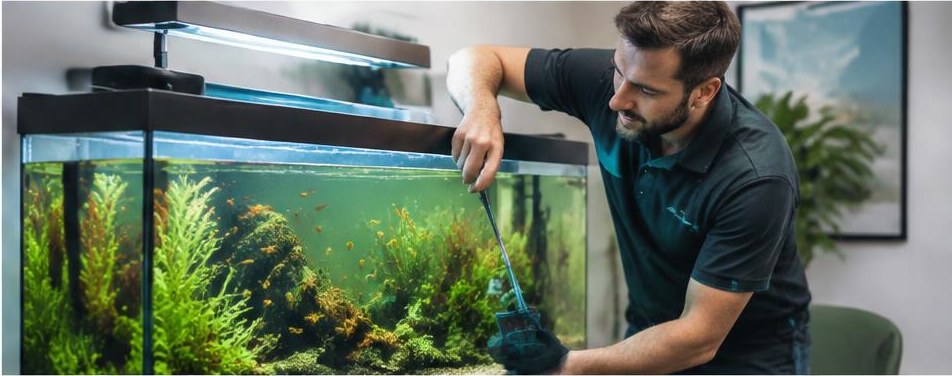
Build a dedicated office aquarium maintenance page with your real service area, commercial project photographs used with permission, and a visible consultation button. Show technicians working neatly in a business setting, not only close-ups of colorful fish. Keep employee faces, security screens, and confidential office materials out of imagery.
Google’s Business Profile guidance recommends complete, accurate information and useful photos. It explains that local results depend on relevance, distance, and prominence, not purchased ranking improvements. Keep your profile consistent with your actual business and service territory. An optional original video could demonstrate a staged service visit and the report an office manager receives.
05
Make the consultation useful before discussing a contract
Ask for the business location, whether a tank already exists, approximate tank dimensions if known, and the best person to contact. Offer an optional photo upload through an appropriately protected form. Save building access credentials and other sensitive instructions for a restricted operational process after qualification.
Use the consultation to review access, aquarium condition, decision authority, and service expectations. Follow with a written scope and clearly separated options. Track qualified consultations, accepted agreements, and reasons proposals stall. If you add promotional email or SMS follow-up, obtain applicable consent and provide opt-outs rather than automatically enrolling every inquiry.
Your next steps
- Choose commercial settings that fit technician capacity.
- Separate installation inquiries from maintenance inquiries.
- Publish inclusions, exclusions, and scheduling expectations.
- Prepare a forwardable scope and proposal format.
- Measure qualified consultations and signed recurring agreements.
Questions owners ask
Should we publish a monthly maintenance price?
Publish a starting price only when its assumptions are clear. Explain which tank, location, and access factors require an assessment.
Should every office receive the same visit schedule?
No. Market a dependable scheduling process, while leaving the actual frequency to your team’s assessment of the aquarium and service needs.
Sources and further reading
Marketing guidance, not legal, medical, or financial advice. Have regulated campaigns reviewed by a qualified professional.