Hardware store
How can hardware stores use helpful videos to compete with big box retailers?
Build useful hardware-store videos around specific product questions, recognizable staff, and next steps connected to current stock and services.
The short answer
Hardware stores can compete with big box retailers through helpful videos that answer a specific project question, show a knowledgeable local employee, and connect viewers to an available product or service instead of ending with a generic invitation to shop.
Your advantage is not a larger catalog. It is helping someone avoid the wrong purchase or an unnecessary second trip. We recommend treating each video as a short extension of the counter conversation, with enough detail to be useful and enough restraint to stay within your staff's expertise.
01
Turn repeat counter questions into a filming queue
Ask employees to record the questions they answer repeatedly, without collecting customer identities. Good candidates include comparing storage-hook mounting styles, reading fastener packaging, choosing a paintbrush for a stated coating, or understanding what information staff need to identify a replacement part.
Prioritize questions tied to products you carry and services you actually provide. Keep each video narrow enough to answer clearly. The SBA's marketing guidance emphasizes target markets, competitive advantages, and specific goals. Translate that into content for nearby shoppers who value help selecting the correct item, not simply the broadest possible audience.
02
Use a problem, comparison, next-step sequence
Open with the shopper's problem, then show the relevant distinction using actual products. Put labels, measurements, and package information where viewers can read them. Finish by explaining what to check before buying or what information to bring to the store. Add captions so the explanation works without sound.
Optional original filming ideas include comparing the dimensions of two similar-looking shelf brackets or demonstrating how a container's lid closes. Follow current manufacturer instructions. Avoid hazardous shortcuts, disabled guards, or oversimplified electrical, gas, structural, and other high-risk work; direct those questions to appropriately qualified professionals.
- Problem: identify the specific source of shopping confusion.
- Comparison: show the feature that changes the purchase decision.
- Next step: name the measurement, product page, or service inquiry.
03
Let employees sound like helpful employees
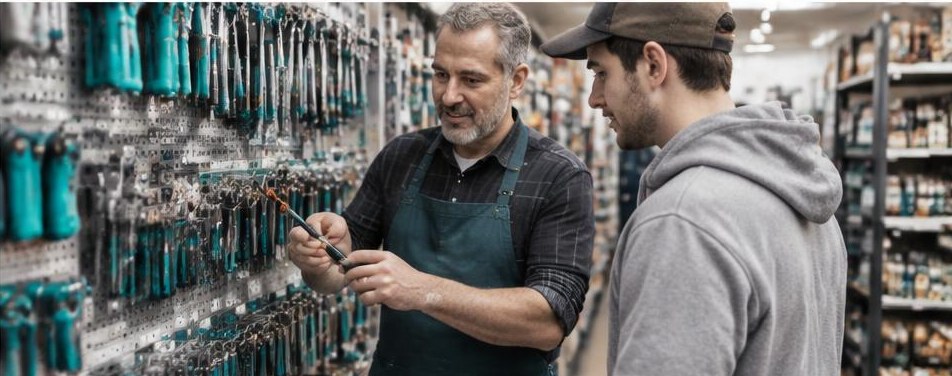
Choose willing staff members who enjoy explaining products, and obtain appropriate permission for filming and use. Give them a short outline rather than a theatrical script. A natural explanation of why two items are not interchangeable can communicate more useful expertise than a polished slogan.
Nickie Marketing & Design's Anchor Ace project reported 162000 TikTok views. That is a relevant hardware-retail example of content attracting attention, not a sales figure, benchmark, or guarantee. For your store, visibility matters only when paired with useful engagement and a realistic route from viewing to shopping.
04
Connect the clip to today's shelf, not yesterday's promise
Before publication, confirm the featured item, variant, service availability, and destination page. If inventory is not live, say that availability changes and offer a stock-check option. Do not imply that viewing a video reserves merchandise. Assign someone to update links or retire clips when products are discontinued.
A useful destination can show the exact item, compatible options, store hours, and pickup or inquiry instructions. Google's Business Profile guidance recommends accurate information, photos and videos, and in-store product listings for eligible retailers. Keep those details aligned with your website; none of these steps guarantees local rankings.
05
Measure whether the explanation helped someone shop
Track product-page visits, stock inquiries, service requests, and identifiable purchases where your systems support attribution. Ask counter staff whether shoppers mention a demonstration and what remained confusing. Treat those comments as directional feedback, not proof that every related sale came from a video.
Batch a manageable group of clips during quieter hours and review usefulness before increasing output. Repeat formats that answer valuable questions, not merely those that attract unrelated views. If you offer promotional email or SMS updates, obtain applicable consent and include opt-outs rather than adding stock-inquiry contacts automatically.
From our portfolio
A local store, not a big box experience
Anchor Ace uses a humorous skit to make its service difference memorable. The business itself is the story.
Your next steps
- Collect recurring product questions from counter staff.
- Choose demonstrations within staff expertise and manufacturer guidance.
- Give each clip one clear shopping next step.
- Verify featured stock, variants, and service availability.
- Review inquiries and purchases alongside viewing activity.
Questions owners ask
Do we need a dedicated presenter?
No. A willing employee, a stable camera, clear audio, and readable product details can support useful demonstrations. Consistency matters more than theatrical delivery.
What if the featured product sells out?
Update the destination promptly, clarify availability, and offer appropriate alternatives without implying they are interchangeable. Retire misleading promotional clips when necessary.
Sources and further reading
Marketing guidance, not legal, medical, or financial advice. Have regulated campaigns reviewed by a qualified professional.