Language school
How can language schools sell practical travel lessons to busy adults?
Package travel language lessons around realistic situations, clear levels, manageable schedules, and a useful sample lesson without promising fluency.
The short answer
Language schools can sell travel lessons by organizing them around practical situations, clearly stating the starting level and time commitment, and offering a representative sample lesson. Promise focused instruction and opportunities to practice, not fluency or effortless conversations by departure day.
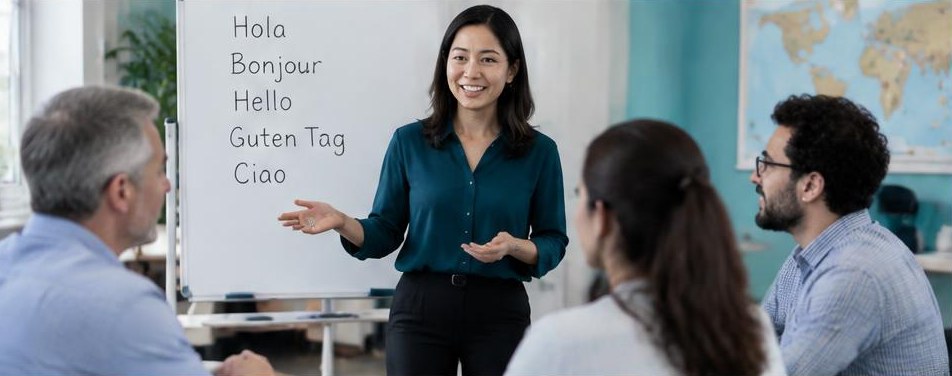
A traveler leaving in several weeks may not want a broad academic course. They may want help checking into a hotel, understanding a menu question, or asking someone to repeat directions. We recommend building the offer around those moments while explaining its limits. Busy adults need to know what they will work on, how lessons fit their calendar, and what preparation is realistic before they book.
01
Turn the itinerary into a lesson menu
Start with travel situations rather than a long list of grammar topics. Group lessons around arrivals, accommodation, restaurants, transportation, shopping, and polite social exchanges. Within each, include both speaking and listening practice. Memorizing a question is less useful if learners have never heard several plausible answers or practiced asking someone to slow down.
Offer destination-aware instruction without suggesting that one phrasebook covers every region or interaction. Ask teachers to explain relevant variations and everyday etiquette carefully, avoiding cultural stereotypes. Keep the scope practical: handling a basic restaurant exchange is a learning aim, while communicating confidently everywhere is an unsupported promise. Do not position a short course as sufficient preparation for medical, legal, or other high-stakes interpretation.
02
Sell a defined commitment, not vague flexibility
State the number of sessions, session length, delivery format, schedule options, group size, and intended starting level. Explain whether the course is suitable for complete beginners, returning learners, or both through separate groups. Publish total pricing and clarify materials, recordings, rescheduling, and expiration policies. If lessons happen online, show the time zone and basic technology requirements.
Account for departure dates without creating artificial urgency. An intake question about the travel month can help recommend a workable format, but staff should be willing to narrow the scope when time is short. Distinguish classroom time from optional practice between meetings. Describe a manageable review activity, such as rehearsing a hotel exchange, without claiming that a fixed daily practice amount guarantees progress.
- Name the situations covered and those outside the course.
- State the entry level and how placement works.
- Explain what learners receive for between-session review.
03
Let one sample exchange demonstrate the teaching
Create a sample lesson that reflects the real experience rather than a vocabulary quiz disconnected from instruction. A teacher might introduce a train-ticket request, model two possible replies, and guide a learner through asking for repetition. Explain the meaning, pronunciation support, and purpose of each phrase. The sample should show how learners recover when the conversation does not follow a script.
An optional original filming idea is a staff role-play of that exchange at two speaking speeds, followed by a brief teacher explanation. Use original or properly licensed materials and clearly identify demonstrations. If featuring adult learners, obtain specific authorization and professional review of privacy and testimonial practices. Never present a rehearsed promotional scene as spontaneous evidence of language progress.
04
Connect travel intent to the right booking page
Create pages for the travel-language courses you actually offer, each with its own scenarios, level, dates, and sample activity. Avoid publishing near-identical destination pages that suggest expertise you do not have. For eligible in-person schools, Google's guidance recommends complete and accurate business information and helpful visual content. Relevance, distance, and prominence influence local results; a course page does not guarantee a ranking.
The SBA's marketing guidance calls for defined audiences, competitive advantages, and specific goals. Track inquiries by language, departure window, and level, then measure suitable bookings and attendance. Use a short form asking for language interest, approximate travel timing, availability, and prior study. Do not request passport details or detailed itineraries. Marketing email and SMS need applicable consent and opt-outs.
Your next steps
- Choose a small set of useful travel situations.
- Publish duration, level, format, pricing, and scheduling terms.
- Include listening practice and requests for clarification.
- Offer a sample that accurately represents instruction.
- Collect only booking-relevant information and review permissions.
Questions owners ask
Should we promise conversational ability before departure?
Define the specific exchanges learners will practice instead. Broad conversational claims can imply more independence and comprehension than a short course supports.
What if someone leaves too soon for the full course?
Offer a smaller, clearly scoped lesson if available, or explain that the existing schedule is unsuitable. Do not compress the promise while leaving expectations unchanged.
Sources and further reading
Marketing guidance, not legal, medical, or financial advice. Have regulated campaigns reviewed by a qualified professional.