Portrait photographer
How can photographers attract branding clients who dislike being on camera?
Attract camera-reluctant branding clients with clear session preparation, practical posing support, and images planned for actual business uses.
The short answer
Photographers can attract branding clients who dislike being on camera by showing exactly how they provide preparation, posing guidance, and useful image choices. Sell a supported working session with a purpose-built shot list, rather than expecting prospects to arrive feeling photogenic.
For a hesitant business owner, a polished portfolio can create an unexpected concern: everyone else seems to know what to do. We recommend making the experience as visible as the finished portraits. Explain how you help an ordinary person get images that feel recognizable and serve their business.
01
Replace confidence claims with concrete reassurance
Avoid promising that every client will love being photographed. Instead, describe what you control: advance planning, clear directions, time to settle in, and a manageable sequence of setups. Prospects can evaluate those details without having to imagine a different personality.
Build a service-page section called something like What if I feel awkward? Explain whether clients receive wardrobe guidance, can share concerns privately, and will see selected previews during the session. Use respectful language rather than labeling people difficult, anxious, or unphotogenic.
02
Ask where the photographs need to work
Start the consultation with placements, not poses. A website banner needs different framing from a speaking profile, proposal cover, or square profile image. Ask clients to bring screenshots of the spaces they want to update so you can plan orientation and room for text.
This also makes your offer easier to buy. The SBA’s marketing guidance emphasizes identifying target markets and competitive advantages. For your photography business, supported preparation and placement-specific planning can be meaningful advantages when they are genuinely part of your service.
- Website introduction: a welcoming portrait with flexible cropping.
- Service page: an authorized scene showing the owner’s working process.
- Presentation biography: a clean headshot that remains legible at small sizes.
03
Give the client a simple preparation path
Send a short guide covering clothing options, location access, expected timing, and what to bring. Suggest checking outfits while sitting and standing, and discuss distracting logos or patterns in relation to the planned images. Avoid overwhelming clients with a lengthy list of appearance rules.
Ask about practical comfort needs and preferences without requesting unnecessary personal information. Explain the retouching approach in advance, including what is standard and what requires discussion. Clients should understand whether your style preserves skin texture and recognizable features before they book.
04
Show how direction works in the room
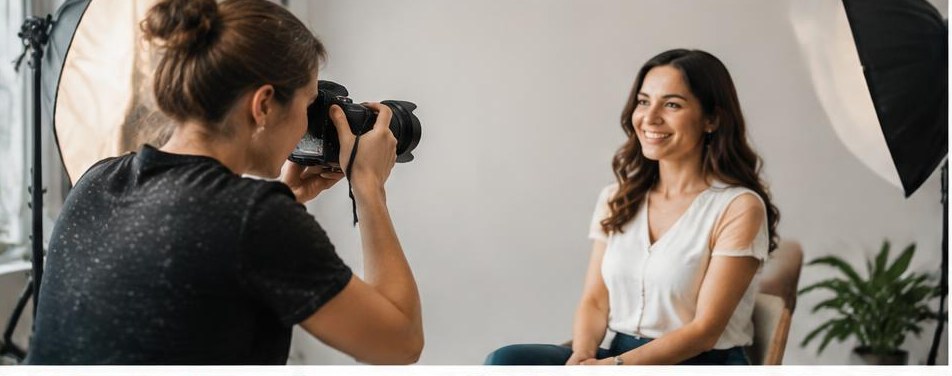
Describe small, specific instructions: where to place hands, how to turn toward the light, or which object to use naturally. Start with an easy setup before moving to more exposed portraits. Offer pauses and choices without making the client responsible for directing the shoot.
An optional original behind-the-scenes video could demonstrate your posing guidance with a willing participant. Obtain permission for filming and publication, and never turn a client’s discomfort into promotional entertainment. The point is to reveal your process, not to manufacture a dramatic transformation.
05
Publish proof that respects the person
Use authentic, authorized work that reflects the kinds of clients you want to attract. Explain the intended use of selected images, such as a consultant’s website header or a maker’s wholesale introduction. Do not imply that every portfolio subject arrived uncomfortable unless they authorized that description.
Separate permission to deliver photographs from permission to display them in your marketing. Clarify client usage rights as well. If your business qualifies for a Google Business Profile, Google recommends accurate information and photos that show what you offer. Keep local visibility claims realistic.
Your next steps
- Explain your posing support on the booking page.
- Map each planned image to a real business placement.
- Send a concise preparation guide before the session.
- Discuss comfort preferences and retouching expectations.
- Confirm usage rights and separate portfolio authorization.
Questions owners ask
Should I advertise specifically to people who hate photos?
You can acknowledge that concern, but lead with support and usefulness. Avoid repeatedly defining prospects by an insecurity.
Can branding sessions include images without faces?
Yes. Hands, tools, workspace details, and process scenes can complement portraits when they genuinely support the client’s planned uses.
Sources and further reading
Marketing guidance, not legal, medical, or financial advice. Have regulated campaigns reviewed by a qualified professional.