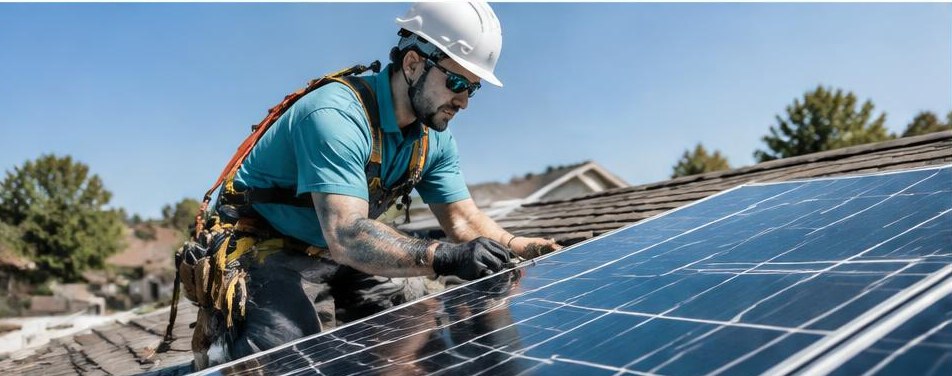
Solar installer
How can solar companies build trust with homeowners wary of sales pitches?
Earn homeowner confidence with clear site evaluations, transparent financing comparisons, documented assumptions, and restrained solar claims.
The short answer
Solar companies build trust by showing homeowners how a recommendation is evaluated, separating estimates from guarantees, and explaining financing and ownership clearly. Do not promise savings, tax eligibility, or a suitable roof before the necessary review. Make evidence and the option to decline part of the process.
A skeptical homeowner does not necessarily oppose solar. They may be resisting an offer they cannot verify or a conversation that moves too quickly toward a signature. We recommend marketing that gives people a way to inspect the proposal, question its assumptions, and understand what remains uncertain.
01
Show the evaluation before the outcome
Explain what a site evaluation considers, such as roof characteristics, shading, available space, electrical conditions, and household electricity use. Identify which information comes from preliminary modeling and which requires on-site confirmation. Avoid presenting a remote estimate as a completed engineering assessment.
Describe possible reasons a project may need revision or may not be appropriate. A roof issue, planned renovation, or changing energy use can alter the conversation. Showing that your process can produce a “not yet” recommendation makes the evaluation more credible than a page implying every home is an ideal fit.
02
Make the assumptions visible and challengeable
Any production or savings illustration should state the inputs that drive it. Depending on the proposal, those may include system design, modeled output, usage, utility pricing assumptions, export treatment, and ongoing costs. Label estimates clearly and explain what could change the result rather than letting one large number dominate the page.
Give homeowners a record of the assumptions they can discuss with an independent advisor. Do not guarantee future utility prices, returns, or tax benefits. Incentive availability and personal eligibility require current verification, and homeowners should consult a qualified tax professional about their own circumstances.
03
Separate the roof decision from the financing decision
A homeowner needs to understand both the equipment proposal and the agreement used to obtain it. Where offered, compare cash purchase, loan, lease, or power purchase arrangements using clearly defined terms. Explain ownership, payment structure, maintenance responsibility, and questions to ask about a future home sale.
Do not use a monthly payment alone to imply total affordability. Have qualified legal and financial compliance professionals review financing advertisements, assumptions, required disclosures, and contract-related statements. Avoid describing an offer as free when the homeowner takes on payments, obligations, or other material commitments.
04
Offer evidence that does not depend on believing the salesperson
Provide the equipment specifications, applicable warranty documents, written scope, and relevant evaluation materials for the actual proposal. Explain what each document establishes and what it does not. Manufacturer coverage should not be confused with installer workmanship coverage or a guarantee of household savings.
An optional original filming idea is a team member walking through a blank proposal and identifying its assumptions and exclusions. If you use testimonials, obtain permission, protect customer information, and have claims reviewed. One homeowner’s experience does not establish what another household will save.
05
Let homeowners control the next step
Offer a clearly described evaluation request instead of a vague button promising instant savings. State what information is needed, who responds, and whether the next stage includes a visit. Collect utility records through an appropriately protected process, not public comments, and review what your analytics tools capture.
Marketing email and SMS need applicable consent and opt-outs. Keep local identity equally transparent: Google’s Business Profile guidance calls for accurate details and real-world representation, while its ranking guidance emphasizes relevance, distance, and prominence. Do not manufacture local offices or promise that profile optimization buys a better ranking.
Your next steps
- Remove guaranteed savings and blanket incentive claims.
- Document the assumptions behind every financial illustration.
- Separate equipment scope from financing terms.
- Provide proposal-specific supporting documents.
- Review consent, privacy, and regulated advertising with qualified professionals.
Questions owners ask
Can we show estimated savings?
Yes, with supportable assumptions, clear limitations, and professional review. Do not present a modeled outcome as a guaranteed household result.
What should our first inquiry form request?
Start with basic contact details, property location, and the homeowner’s question. Gather detailed records later through an appropriately protected process.
Sources and further reading
Marketing guidance, not legal, medical, or financial advice. Have regulated campaigns reviewed by a qualified professional.