Lash studio
How can lash studios attract clients who want a natural-looking result?
Attract natural-look lash inquiries with preference-led consultations, honest closeups, clear upkeep costs, and realistic suitability language.
The short answer
Lash studios can attract clients seeking a natural-looking result by defining that look through consultation, showing accurate authorized closeups, explaining upkeep before booking, and making clear that the final service depends on individual suitability.
“Natural” is a preference, not a universal lash map. One person means barely noticeable definition; another means fuller lashes that still feel understated. At Nickie Marketing & Design, we recommend helping clients describe the difference before they choose a service. Your marketing should make a subtle result discussable without promising that every reference photo can be reproduced.
01
Translate “natural” into client language
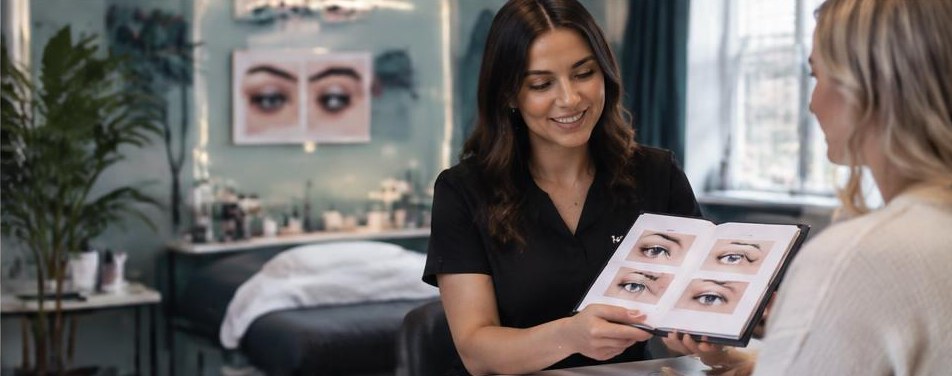
Build your consultation around what the client wants to notice and what they want to avoid. Ask whether they prefer subtle definition, a soft overall appearance, or a look that feels less prominent than their usual makeup. Let them bring references while explaining that references guide a conversation rather than guarantee a match.
Avoid asking newcomers to select technical specifications they do not understand. Explain your menu in ordinary language and provide an “unsure which service” route. The practitioner should assess suitability within their licensed scope instead of letting a marketing quiz prescribe a service from a few aesthetic preferences.
02
Build a portfolio that makes subtlety visible
Use sharp, authorized closeups with consistent lighting and useful angles. Include a wider view when appropriate and separately permitted so visitors can judge the overall effect, not just individual lashes. Identify the service accurately, and avoid filters or retouching that changes the apparent density, length, or finish.
Explain that eye shape, existing lashes, and other individual factors mean results vary. Do not label a style as universally suitable or guaranteed to look undetectable. Obtain specific permission for publication and its intended channels. A client agreeing to a service has not automatically agreed to appear in ads.
- Keep captions descriptive rather than outcome-guaranteeing.
- Avoid comparing images taken under misleadingly different conditions.
- Use real portfolio work rather than unrelated inspiration as proof.
03
Put the maintenance conversation before checkout
Someone seeking a subtle appearance may also want a low-commitment routine, but those preferences are not identical. Explain the ongoing appointments associated with the service, your pricing structure, and how refill eligibility is determined. Publish removal and cancellation policies so the initial booking is not the only cost the client sees.
Do not claim maintenance-free wear or promise a fixed duration for everyone. Have your licensed practitioner explain appropriate service care through the studio’s professional process. Marketing should describe where clients receive those instructions, not improvise advice about irritation, reactions, or eye health. Direct medical concerns to an appropriate healthcare professional.
04
Make reassurance specific, not absolute
Claims such as “damage-free,” “safe for everyone,” or “allergy-proof” can create expectations your studio cannot responsibly guarantee. Instead, describe the consultation, accurate practitioner credentials, and the opportunity to ask questions before proceeding. Obtain qualified compliance review for regulated service claims, testimonials, and suitability language.
Collect any necessary sensitive information through an appropriately protected professional intake process. Keep it out of advertising audiences and tracking fields. Optional original filming could show a practitioner explaining style vocabulary using sample materials, without making health claims or exposing a client’s intake information.
05
Connect subtle-style interest to a clear booking path
Create a focused page with an honest gallery, plain-language service options, starting costs, and a consultation-led booking button. Link social posts about understated looks to that page rather than a crowded menu. If email or SMS nurtures inquiries, obtain applicable consent and include opt-outs rather than automatically enrolling everyone who asks a question.
Google’s Business Profile guidance recommends accurate details and photos that show what a business offers. Keep those details aligned with your page. Following the SBA’s emphasis on specific marketing goals, track consultation requests, unsuitable service selections, and maintenance questions. These signals reveal whether people understand the offer before arriving.
Your next steps
- Ask what natural-looking means to each client.
- Provide accurate, authorized closeups with descriptive captions.
- Explain ongoing costs, refill eligibility, and removal policies.
- Remove universal safety and appearance guarantees.
- Protect sensitive intake details from advertising systems.
- Offer consultation-led booking for clients unsure what to select.
Questions owners ask
Should we name a service “natural lashes”?
You can use it as a style description, but explain what you mean. Do not imply that the label establishes suitability or guarantees an identical result.
Can reference photos help clients choose?
Yes. Use them to discuss preferences and limits, not to promise duplication. Only publish reference material you have appropriate rights and permission to use.
Sources and further reading
Marketing guidance, not legal, medical, or financial advice. Have regulated campaigns reviewed by a qualified professional.