Nail salon
How can nail salons promote care and craftsmanship beyond trend photos?
Show the service decisions, appointment details, and factual care practices that help nail clients choose your salon with confidence.
The short answer
Nail salons can promote care and craftsmanship by showing how appointments work: service selection, shaping, preparation, finishing, and factual sanitation practices. Make those details easy to understand and connect them to the correct booking choice, without making medical nail claims.
Trend photos answer one question: can you create that look? They often leave more important booking questions unanswered. Will removal require extra time? Is detailed art included? Can someone ask for a shorter shape? We recommend making the service experience visible alongside the finished set, so prospective clients understand what they are paying for.
01
Build a menu that prevents appointment surprises
Start with the decisions clients actually face: polish type, desired length, existing product, removal, and design complexity. Each service description should state what is included, its scheduled duration, the price or starting price, and which additions need a separate selection. Do not make clients decode internal salon terminology.
Photograph examples of your own art tiers if your salon uses them. A simple accent and a detailed hand-painted design should not share an unexplained add-on label. Give visitors an inquiry route when they cannot identify an existing product or determine how much design time to reserve.
02
Photograph the choices behind the finish
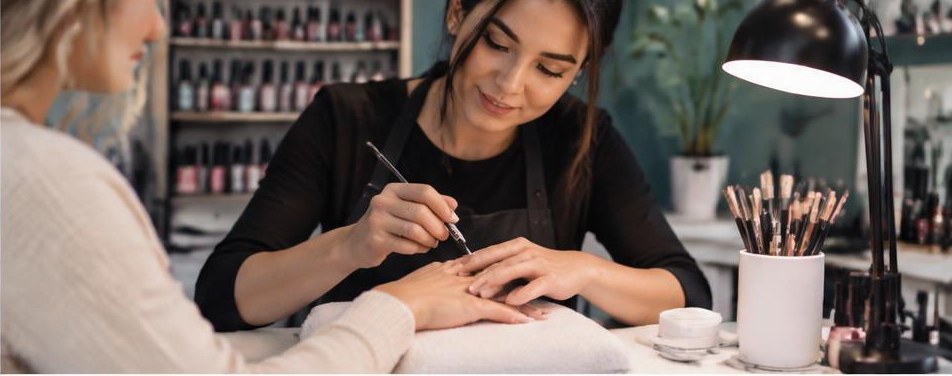
Create a small editorial series around shape consistency, color consultation, careful detailing, and the final review. Captions should explain what the technician is doing and why it matters to the requested appearance. This turns craftsmanship into something clients can recognize rather than a vague claim of superior quality.
An optional original filming idea is a close-up demonstration of design planning on practice tips. It can show the difference between two art options without exposing a client’s identity. For client images, obtain permission covering the intended channels, avoid identifying details, and do not retouch away imperfections while presenting the image as an unaltered result.
03
Describe sanitation precisely, not dramatically
Publish only practices your salon actually performs and can substantiate. If you explain cleaning, disinfection, or single-use items, use the correct terms and have the responsible licensed professional verify the wording against applicable requirements. A staged photograph of a tidy workstation does not establish that every procedure is being followed.
Avoid phrases such as infection-proof, medically safe, or guaranteed healthy nails. Marketing should not diagnose conditions or suggest that a cosmetic appointment treats disease. Give staff a neutral way to handle concerns outside their scope and have relevant safety or regulated claims professionally reviewed before publication.
04
Explain how the appointment adapts to the client
Show that the consultation includes practical preferences: keyboard use, desired length, color opacity, and the amount of time available. Present these as style and scheduling considerations, not promises about durability or nail health. Explain how a technician confirms the selected shape and design before proceeding.
Publish policies for late arrivals, removal from another salon, repairs, and requests that exceed the reserved time. Calm, specific policies communicate care better than a wall of warnings. They also let a client choose a simpler design or a different appointment instead of discovering a time conflict at the table.
05
Make your local presence match the workbench
Google’s Business Profile guidance recommends accurate business information, photos, and helpful review replies. Use current service imagery and keep location details and hours correct. Respond to feedback without disclosing appointment details or arguing about a client’s personal circumstances. Invite honest feedback without incentives or pressure.
The SBA recommends connecting competitive advantages to specific marketing goals. For your salon, monitor incorrect service selections, design-time inquiries, and bookings from educational pages. These signals reveal whether your content helps people choose well. Any promotional email or SMS program needs applicable consent and clear opt-outs.
Your next steps
- List inclusions, removal rules, and design add-ons for each service.
- Photograph actual examples of your art tiers.
- Verify sanitation language with the responsible professional.
- Document permission for client photos and marketing uses.
- Review booking mistakes to identify missing explanations.
Questions owners ask
Should we stop posting nail trends?
No. Pair trend images with useful details about appointment selection, design time, and what is included so inspiration leads to an appropriate booking.
Can we advertise services for damaged nails?
Avoid diagnostic or treatment claims. Describe cosmetic services accurately, stay within professional scope, and obtain professional review for safety-related messaging.
Sources and further reading
Marketing guidance, not legal, medical, or financial advice. Have regulated campaigns reviewed by a qualified professional.