Tattoo studio
How can tattoo artists attract cover-up consultations sensitively?
Invite cover-up inquiries with respectful creative, private photo intake, relevant artist portfolios, and honest consultation expectations.
The short answer
Tattoo artists can attract cover-up consultations sensitively by avoiding shame-based messaging, offering private photo intake, showing relevant artist specialties, and explaining that feasibility must be assessed before any design or coverage promise.
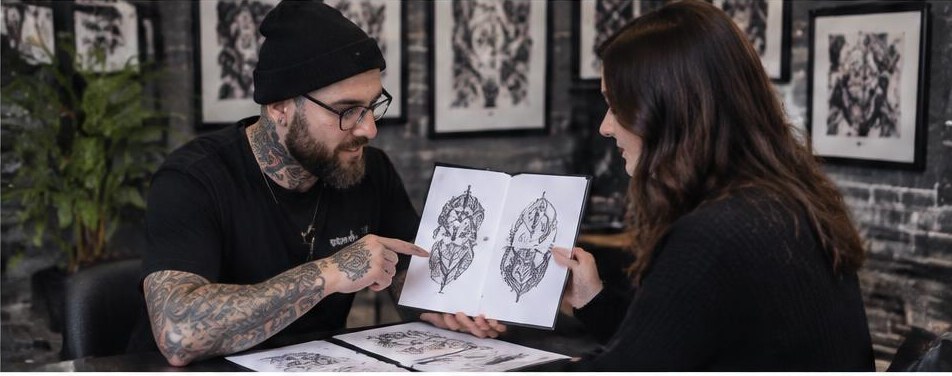
An existing tattoo may carry a difficult story, or it may simply no longer suit someone’s taste. Your marketing does not need to discover which. At Nickie Marketing & Design, we recommend presenting a cover-up consultation as a respectful design conversation. The visitor should understand who will review the request, what information is needed, and how to proceed without sharing a personal explanation.
01
Remove the judgment from the invitation
Use language such as, “Explore possibilities for an existing tattoo” or “Talk with an artist about a new direction.” Avoid captions about embarrassing mistakes, bad decisions, or names someone should regret. Even playful ridicule can make a person wonder whether the studio will treat their own tattoo as entertainment.
Do not require a reason for wanting a cover-up. If someone volunteers a personal story, staff can acknowledge it without turning it into promotional content. Build campaigns around the artistic service and the consultation process, not inferred trauma, relationship status, or assumptions about why someone wants a change.
02
Give photos a private route to the artist
A public comment thread is not an intake system. Provide a private form with a protected upload method and explain who reviews submissions. Request only information necessary for an initial assessment, such as approximate dimensions, placement, and design interests. Let visitors ask a question before uploading if they are uncomfortable.
Tell people to exclude faces, identifying documents, and unrelated surroundings when practical. Restrict access to staff who need it and establish retention and deletion practices with qualified privacy guidance. Keep uploaded photos and sensitive details out of advertising tools. Permission to assess a tattoo is not permission to publish it.
- State the expected response window your team can maintain.
- Offer a way to ask about an in-person consultation.
- Separate portfolio authorization from the intake request.
03
Explain why the answer cannot be instant
A cover-up page should explain that existing ink, placement, dimensions, and the proposed artwork affect what an artist may be able to offer. A reference image communicates taste, not a guaranteed design. Avoid promising complete concealment, a smaller replacement, or a finished price before the artist has enough information.
Distinguish an inquiry, a consultation, and a tattoo appointment. Explain when the artist discusses possible scale, design direction, session planning, and pricing. If the request is not a fit, say so respectfully. Questions involving skin health or medical procedures should go to an appropriately qualified professional, not become marketing advice.
04
Show the right artist, not just the boldest reveal
Connect cover-up inquiries to artists whose actual work is relevant. A portfolio might demonstrate ornamental composition, illustrative work, or another documented specialty. Explain what each selected example illustrates about design decisions without implying that the same approach will work for every existing tattoo.
Use only authorized photographs and accurate labels, including whether an image shows fresh or healed work when known. Avoid editing that changes the apparent coverage. For optional original filming, an artist could explain a fictional design exercise on paper. That demonstrates the consultation mindset without exposing anyone’s private story.
05
Define success as a suitable consultation
Google’s Business Profile guidance recommends accurate information and photos that show a business’s offerings. Keep studio details and relevant artist information consistent with the website. Answer reviews without revealing consultation details, identifying tattoos, or personal circumstances that the reviewer has not chosen to make public.
The SBA recommends tying marketing to competitive advantages and specific goals. For cover-ups, track suitable inquiries, consultation attendance, and requests that fall outside your artists’ specialties. Do not optimize solely for cheap leads. If regulated advertising, testimonials, or privacy-sensitive creative is involved, obtain professional compliance review before publication.
Your next steps
- Remove ridicule and regret-based assumptions from campaign copy.
- Provide private, access-controlled photo intake.
- Explain inquiry, consultation, and booking as separate steps.
- Match requests to demonstrated artist specialties.
- Obtain separate authorization for public portfolio use.
- Review privacy-sensitive workflows and advertising professionally.
Questions owners ask
Should we require a photo before booking?
Explain why a photo helps preliminary review, but offer a discussion route for people who prefer not to upload. State any consultation requirements clearly.
Can we post before-and-after cover-ups?
Use specific authorization, accurate context, and consistent presentation. Do not imply every tattoo can achieve comparable coverage or publish the person’s story without permission.
Sources and further reading
Marketing guidance, not legal, medical, or financial advice. Have regulated campaigns reviewed by a qualified professional.